
The ‘Definition of a Man and a Woman’ Bill, which attempts to legislatively define gender in line with two ‘biological’ sexes, is currently open for public submissions.
At Community Research, we’ve been shaping up a Special Collection of research and resources about queerness in Aotearoa – so here’s an exploration of a few things that some of that research is saying.
Submissions close Thursday 2nd of July, so make the most of this last weekend to be writing up your submission! You can do so here.
1.
The ‘Definition of a Man and a Woman’ Bill
What does the research say?
2.
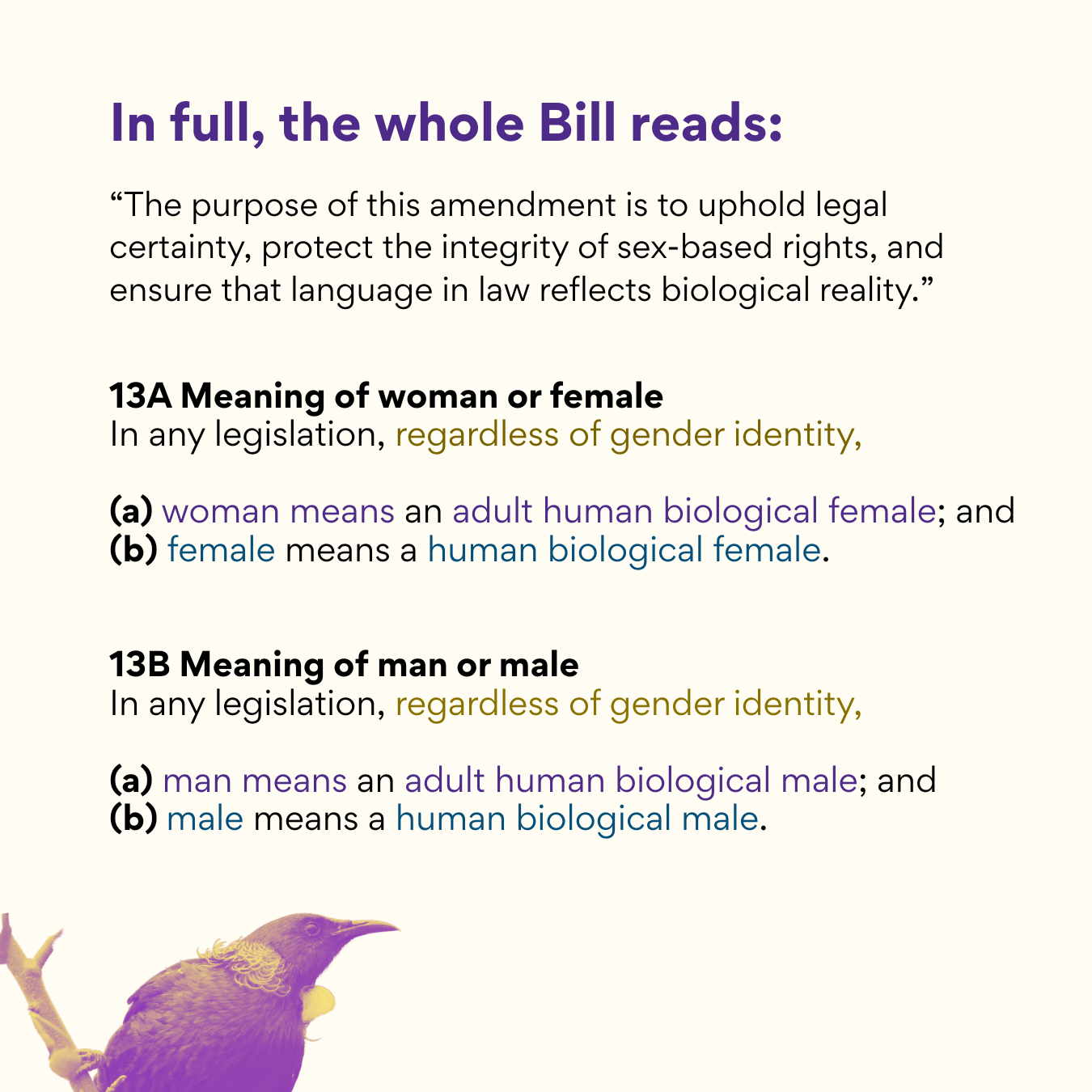
In full, the whole Bill reads:
“The purpose of this amendment is to uphold legal certainty, protect the integrity of sex-based rights, and ensure that language in law reflects biological reality.”
13A Meaning of woman or female
In any legislation, regardless of gender identity,
(a) woman means an adult human biological female; and
(b) female means a human biological female.
13B Meaning of man or male
In any legislation, regardless of gender identity,
(a) man means an adult human biological male; and
(b) male means a human biological male.
3.
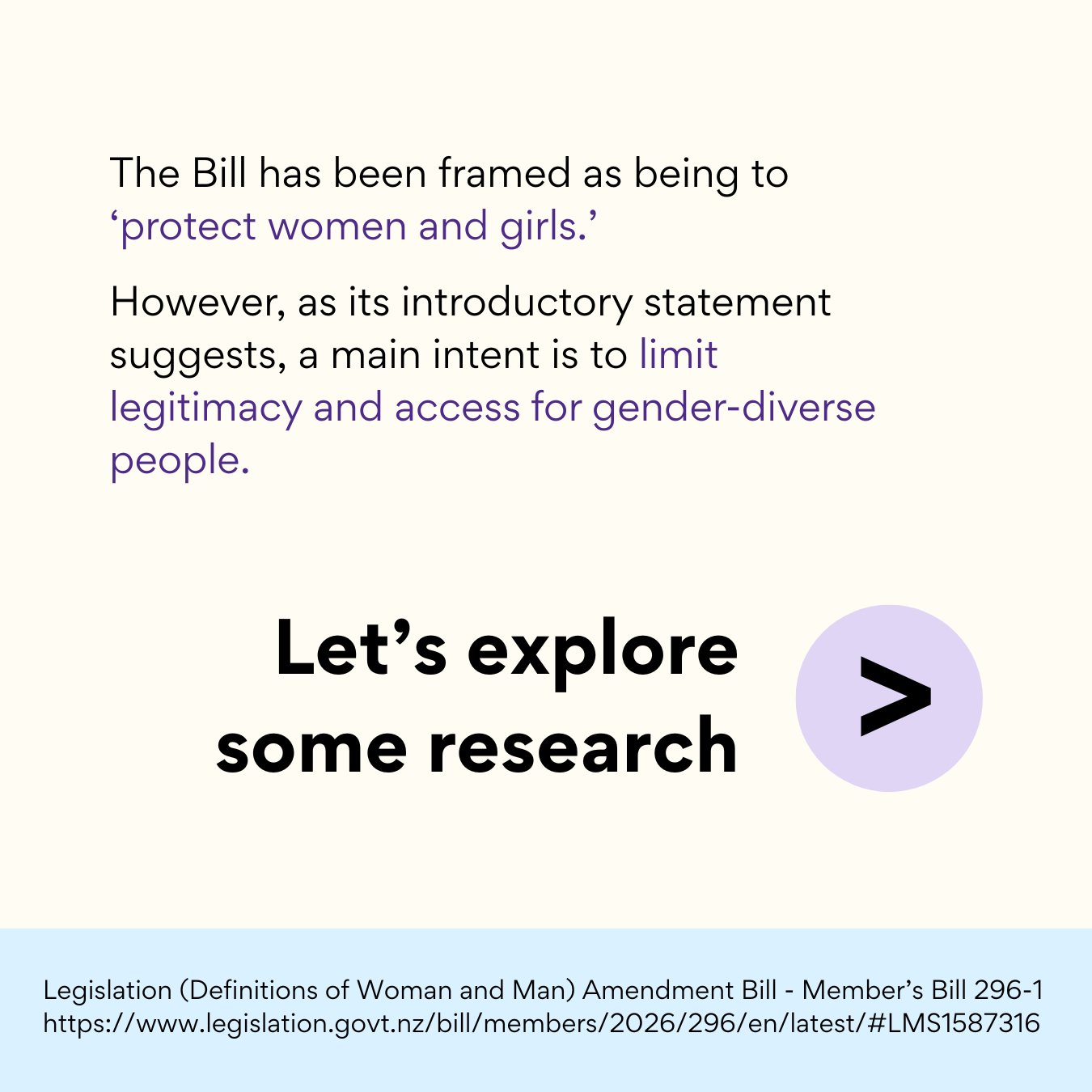
The Bill has been framed as being to ‘protect women and girls.’ However, as its introductory statement suggests, a main intent is to limit legitimacy and access for gender-diverse people.
Let’s explore some research
4.
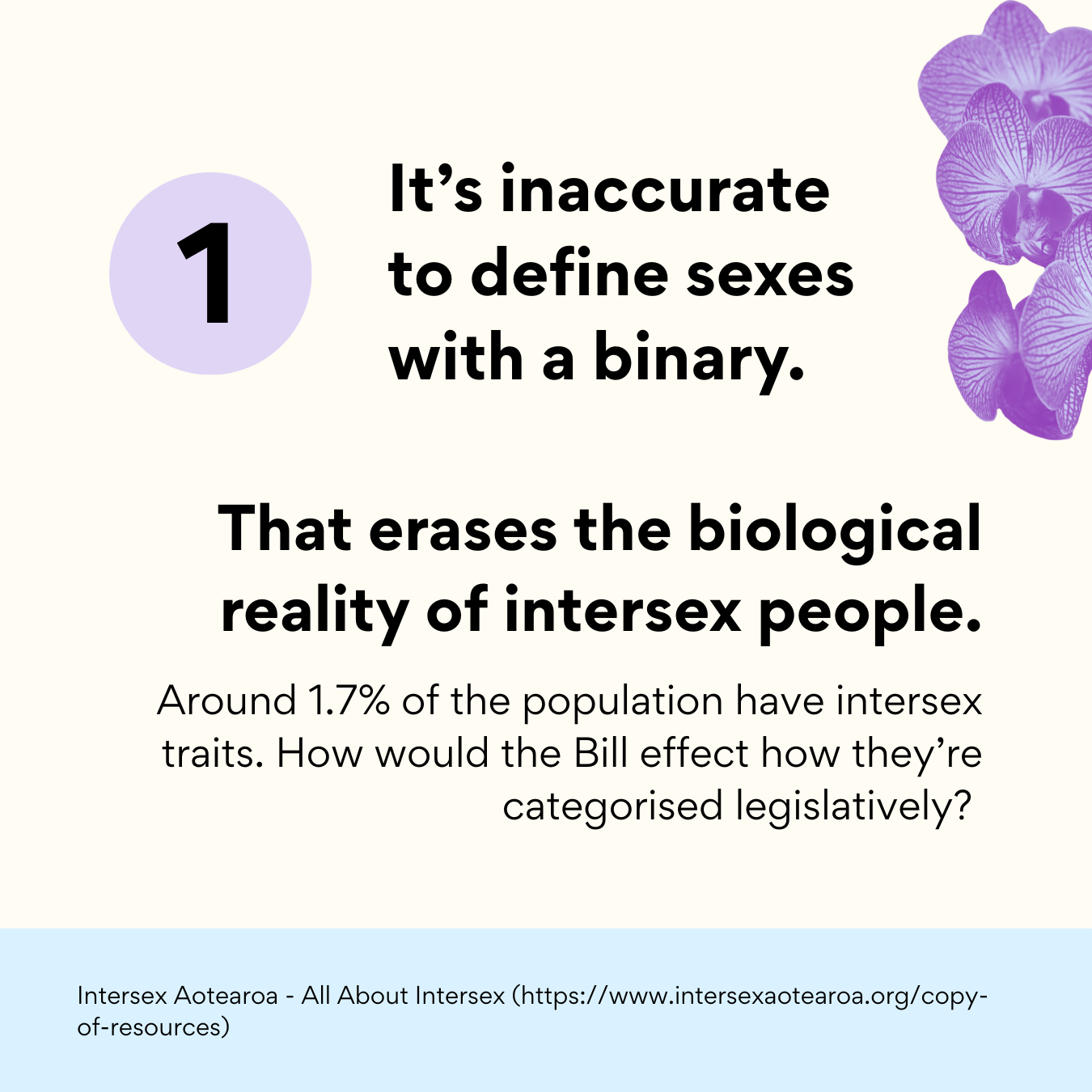
It’s inaccurate to define sexes with a binary. That erases the biological reality of intersex people. Around 1.7% of the population have intersex traits. How would the Bill effect how they’re categorised legislatively?
5.
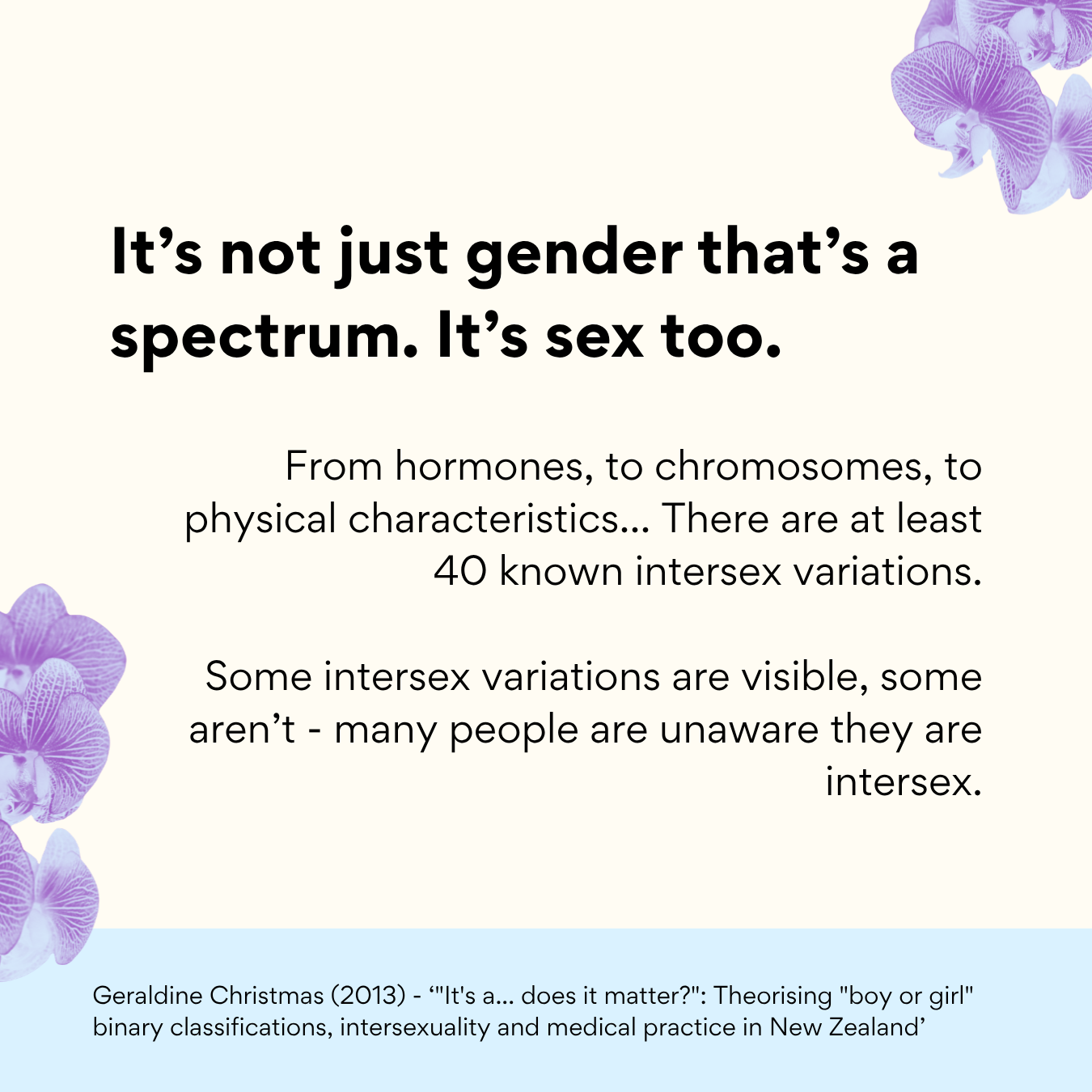
It’s not just gender that’s a spectrum. It’s sex too.
From hormones, to chromosomes, to physical characteristics… There are at least 40 known intersex variations.
Some intersex variations are visible, some aren’t – many people are unaware they are intersex.
6.
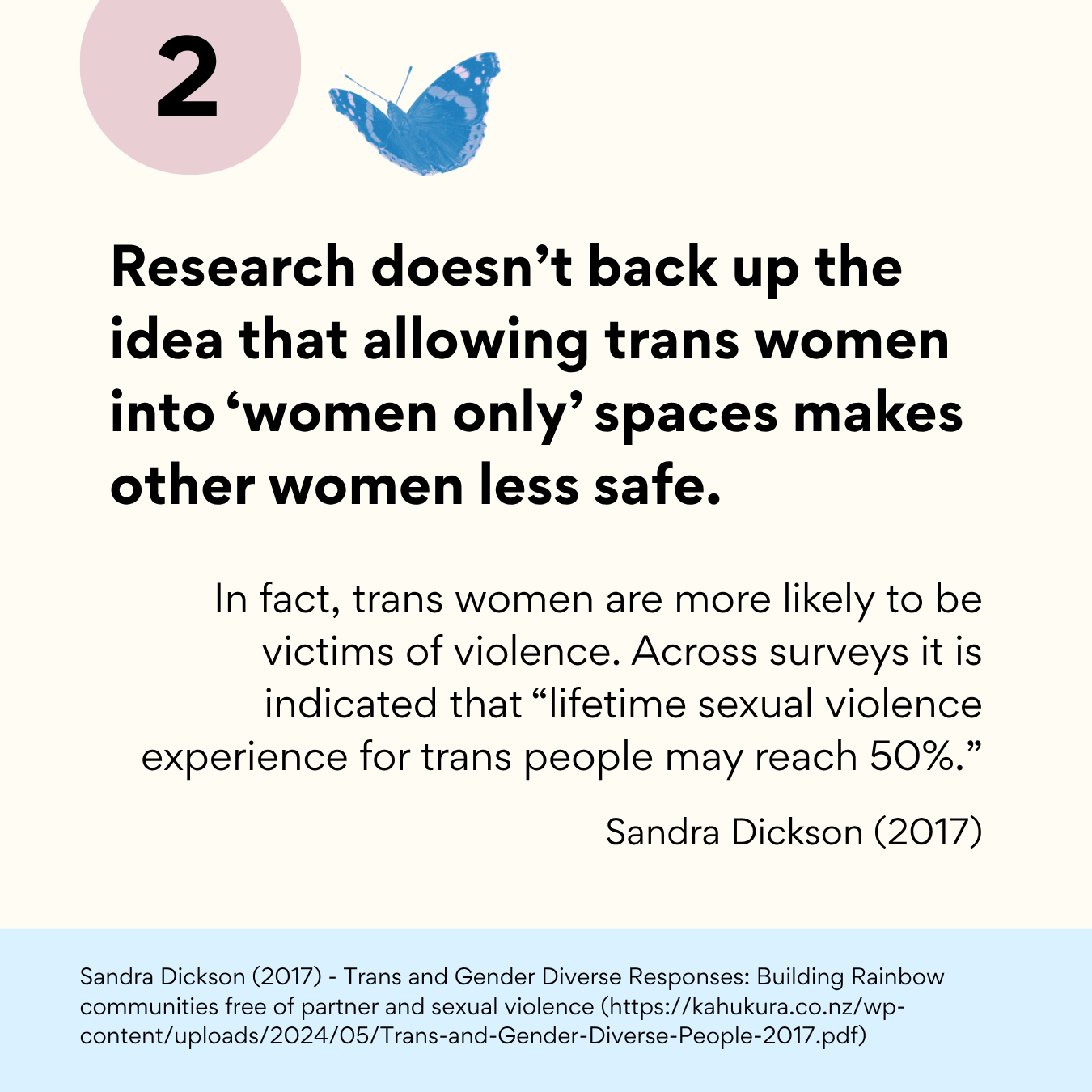
Research doesn’t back up the idea that allowing trans women into ‘women only’ spaces makes other women less safe.
In fact, trans women are more likely to be victims of violence. Across surveys it is indicated that “lifetime sexual violence experience for trans people may reach 50%.”
Sandra Dickson (2017)
7.
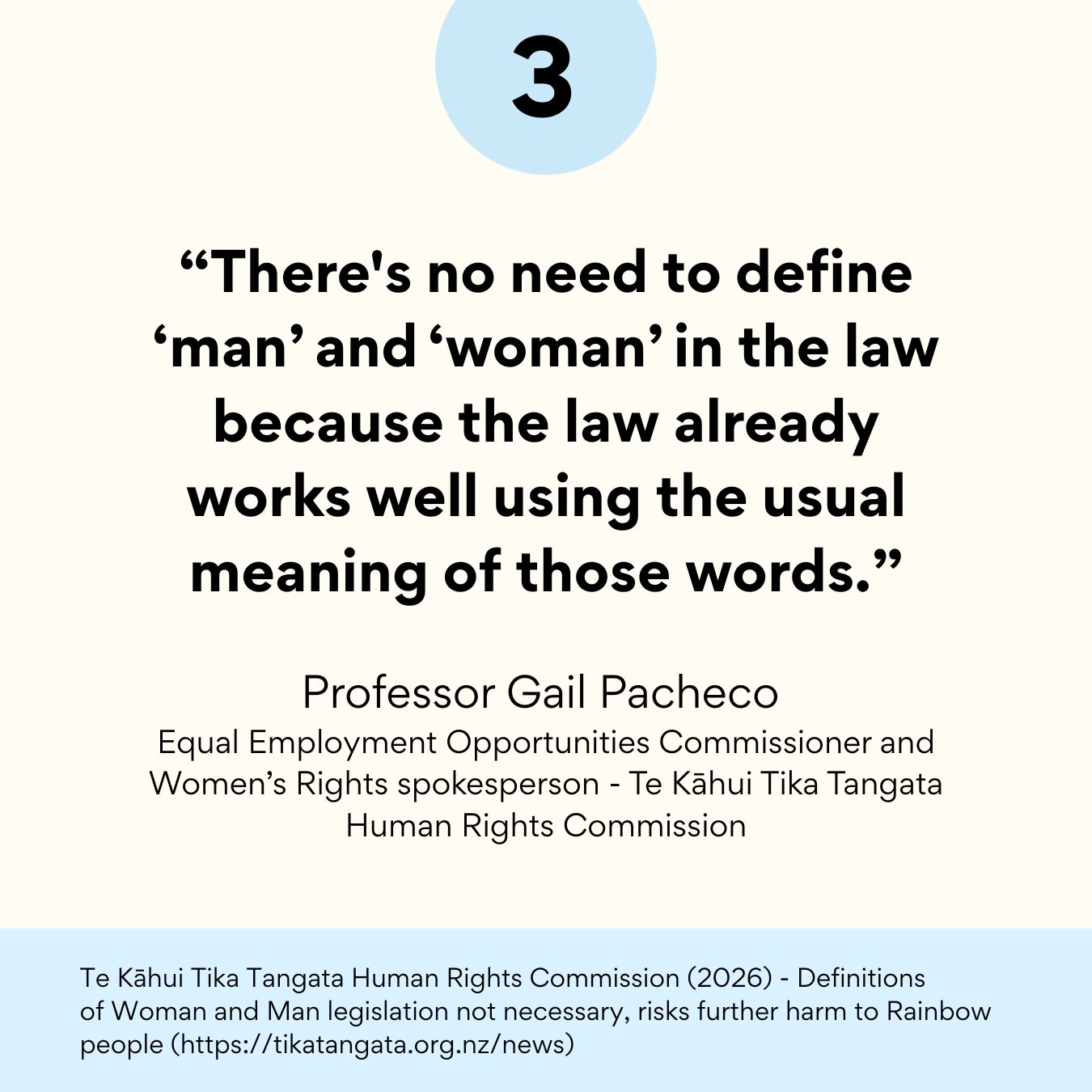
“There’s no need to define ‘man’ and ‘woman’ in the law because the law already works well using the usual meaning of those words.”
Professor Gail Pacheco – Equal Employment Opportunities Commissioner and Women’s Rights spokesperson for Te Kāhui Tika Tangata Human Rights Commission
8.
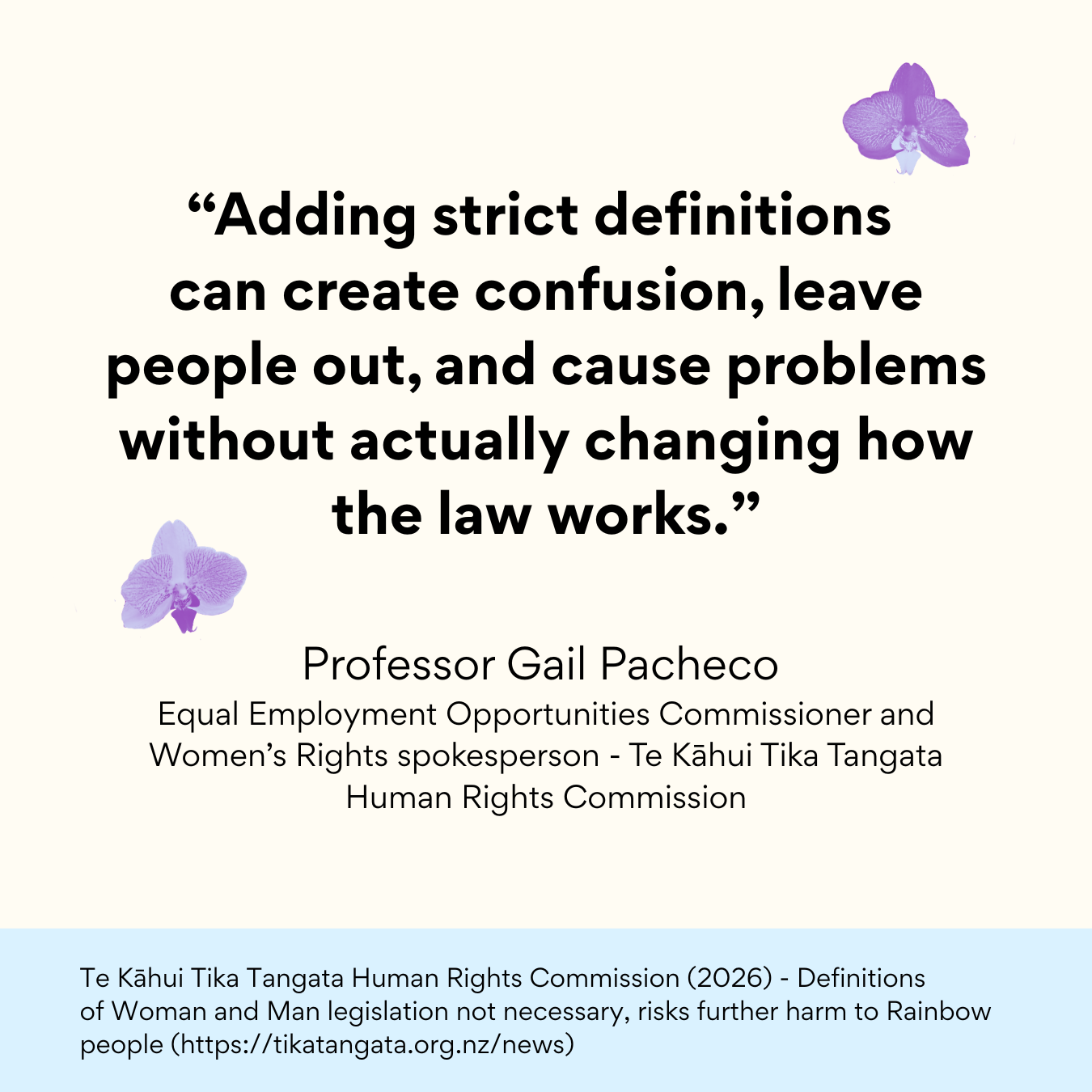
“Adding strict definitions
can create confusion, leave people out, and cause problems without actually changing how the law works.”
Professor Gail Pacheco – Equal Employment Opportunities Commissioner and Women’s Rights spokesperson for Te Kāhui Tika Tangata Human Rights Commission
9.
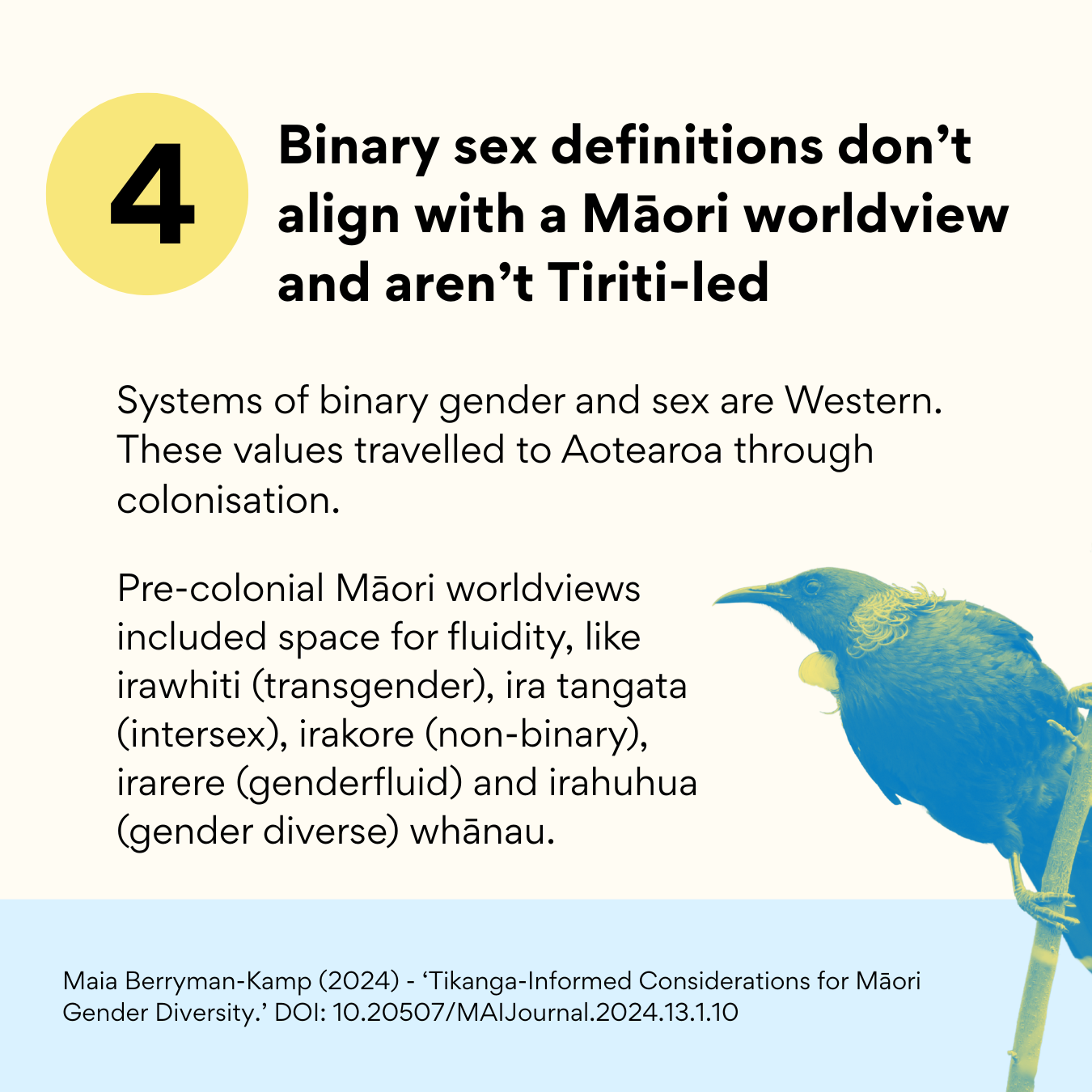
Binary sex definitions don’t align with a Māori worldview and aren’t Tiriti-led
Systems of binary gender and sex are Western. These values travelled to Aotearoa through colonisation.
Pre-colonial Māori worldviews included space for fluidity, like irawhiti (transgender), ira tangata (intersex), irakore (non-binary), irarere (genderfluid) and irahuhua (gender diverse) whānau.
10.
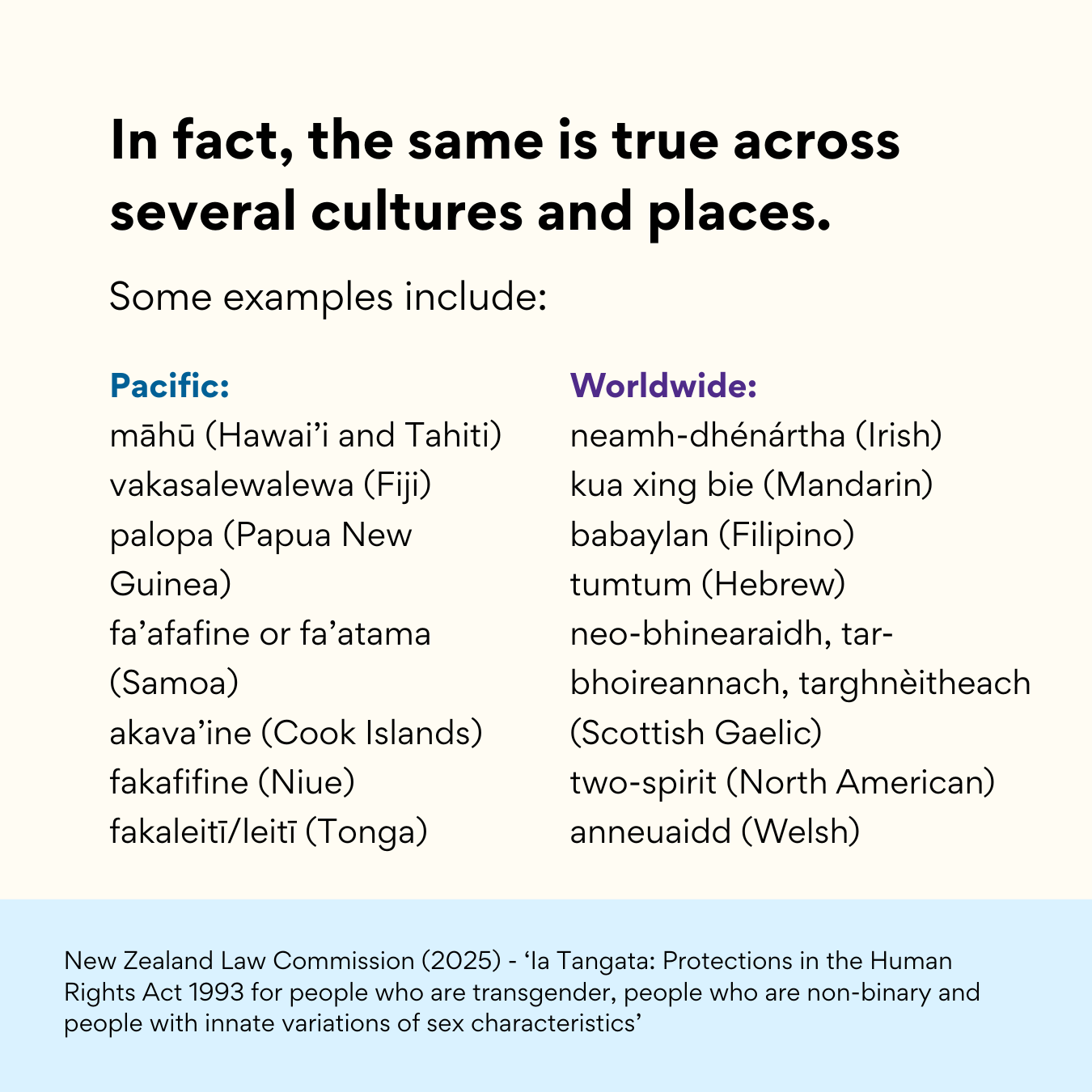
In fact, the same is true across several cultures and places.
Some examples include:
Pacific:
māhū (Hawai’i and Tahiti)
vakasalewalewa (Fiji)
palopa (Papua New Guinea)
fa’afafine or fa’atama (Samoa)
akava’ine (Cook Islands)
fakafifine (Niue)
fakaleitī/leitī (Tonga)
Worldwide:
neamh-dhénártha (Irish)
kua xing bie (Mandarin)
babaylan (Filipino)
tumtum (Hebrew)
neo-bhinearaidh, tar-bhoireannach, targhnèitheach (Scottish Gaelic)
two-spirit (North American)
anneuaidd (Welsh)
11.
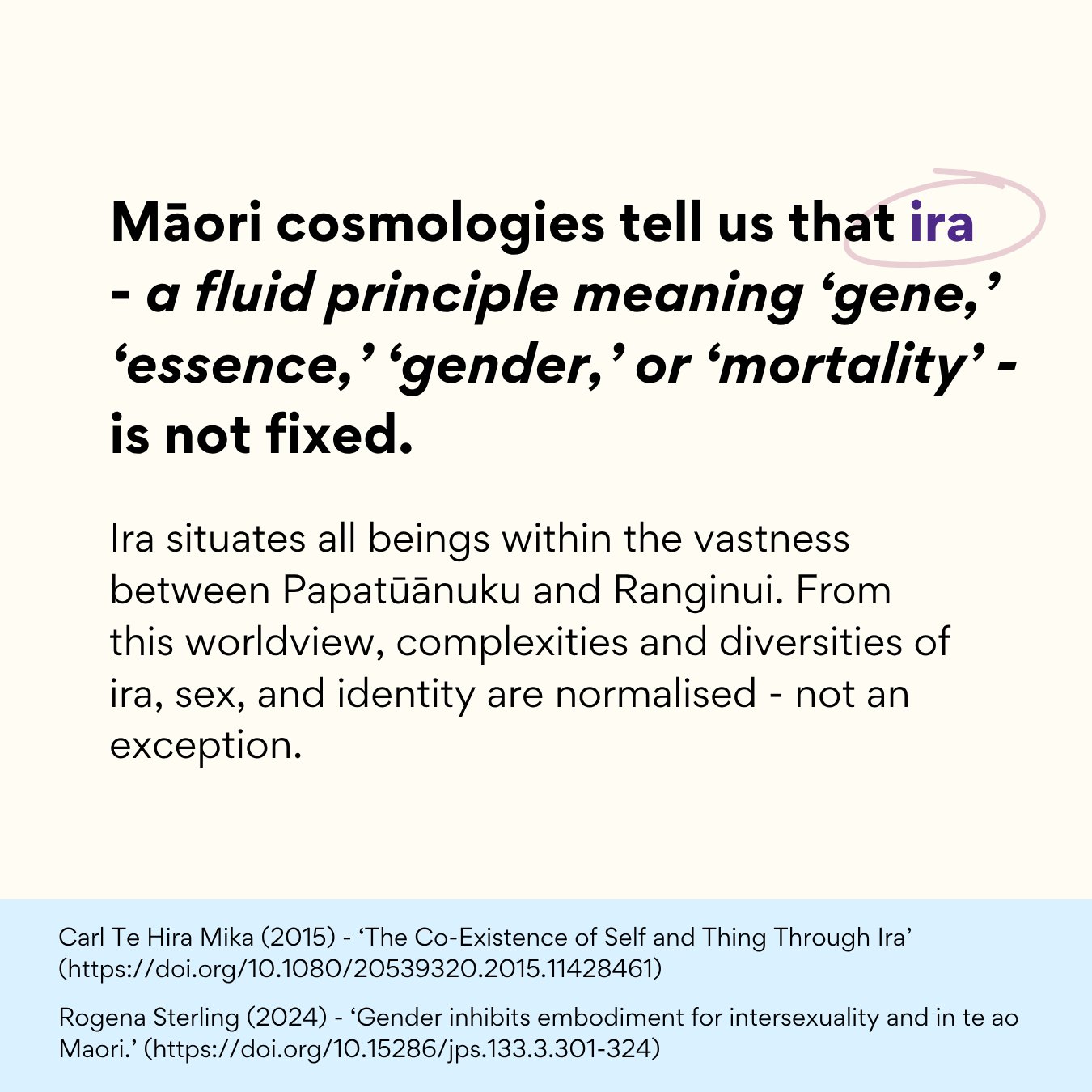
Māori cosmologies tell us that ira – a fluid principle meaning ‘gene,’ ‘essence,’ ‘gender,’ or ‘mortality’ – is not fixed.
Ira situates all beings within the vastness between Papatūānuku and Ranginui. From this worldview, complexities and diversities of ira, sex, and identity are normalised – not an exception.
12.
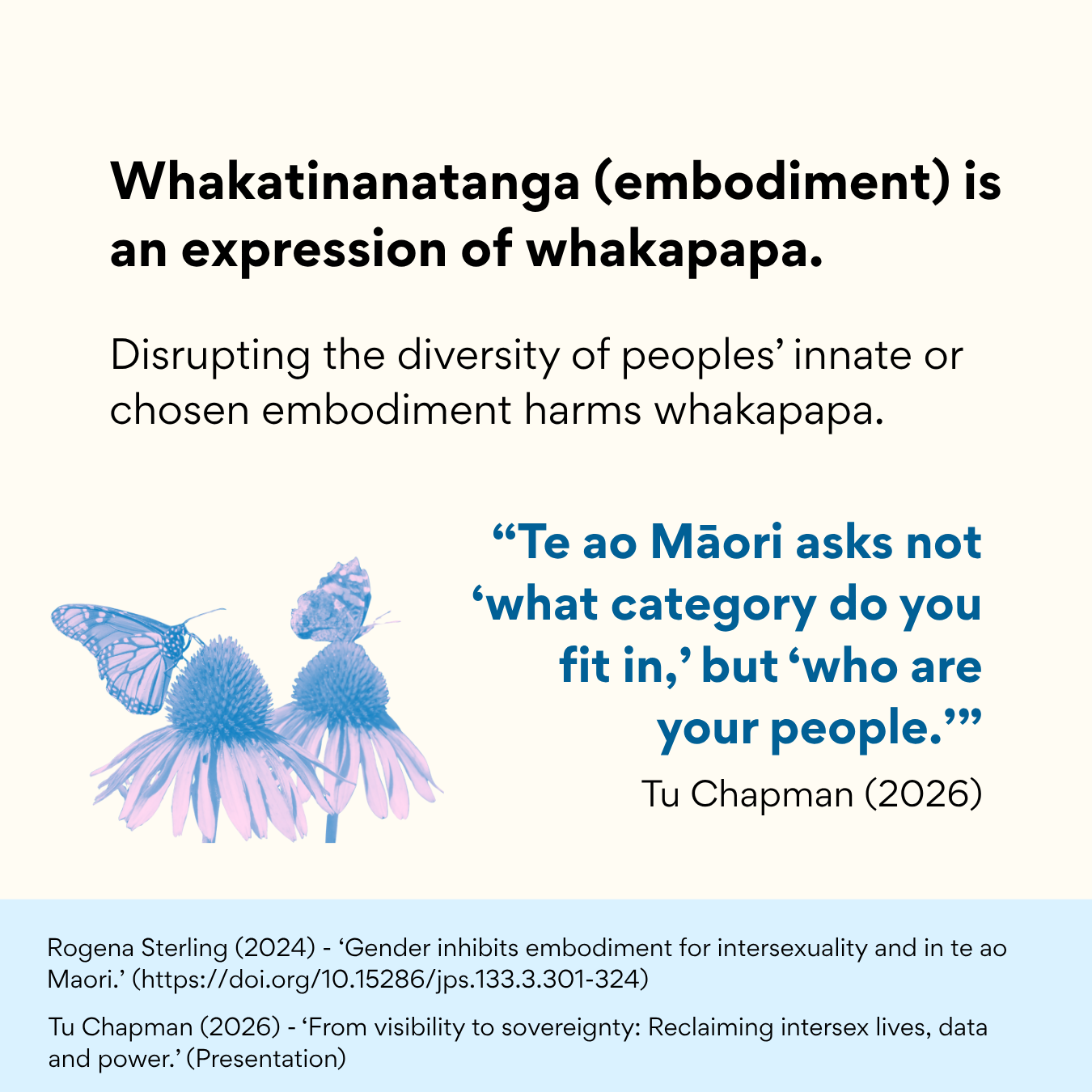
Whakatinanatanga (embodiment) is an expression of whakapapa.
Disrupting the diversity of peoples’ innate or chosen embodiment harms whakapapa.
“Te ao Māori asks not ‘what category do you fit in,’ but ‘who are your people.’”
Tu Chapman (2026)
13.
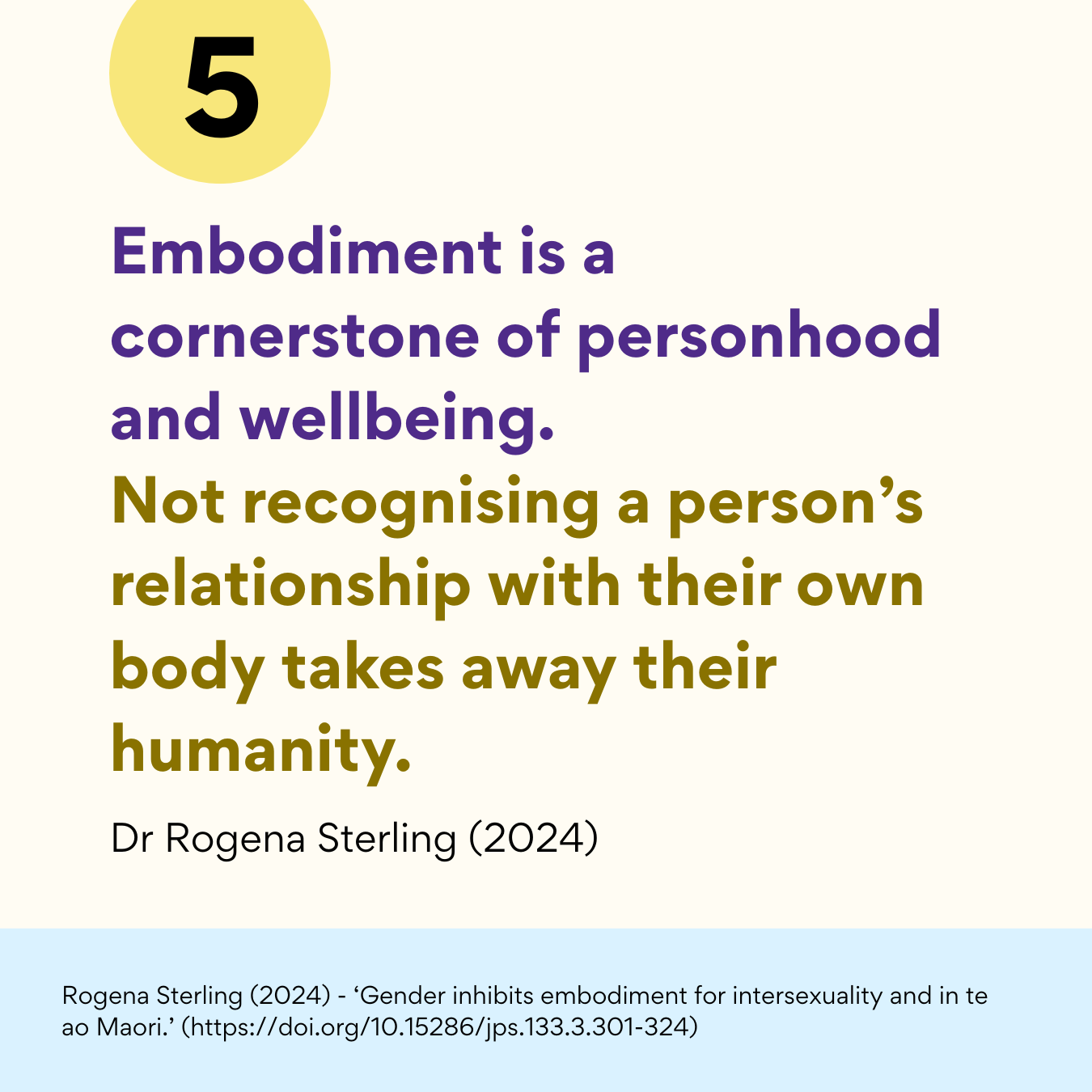
Embodiment is a cornerstone of personhood and wellbeing.
Not recognising a person’s relationship with their own body takes away their humanity.
Dr Rogena Sterling (2024)
14.
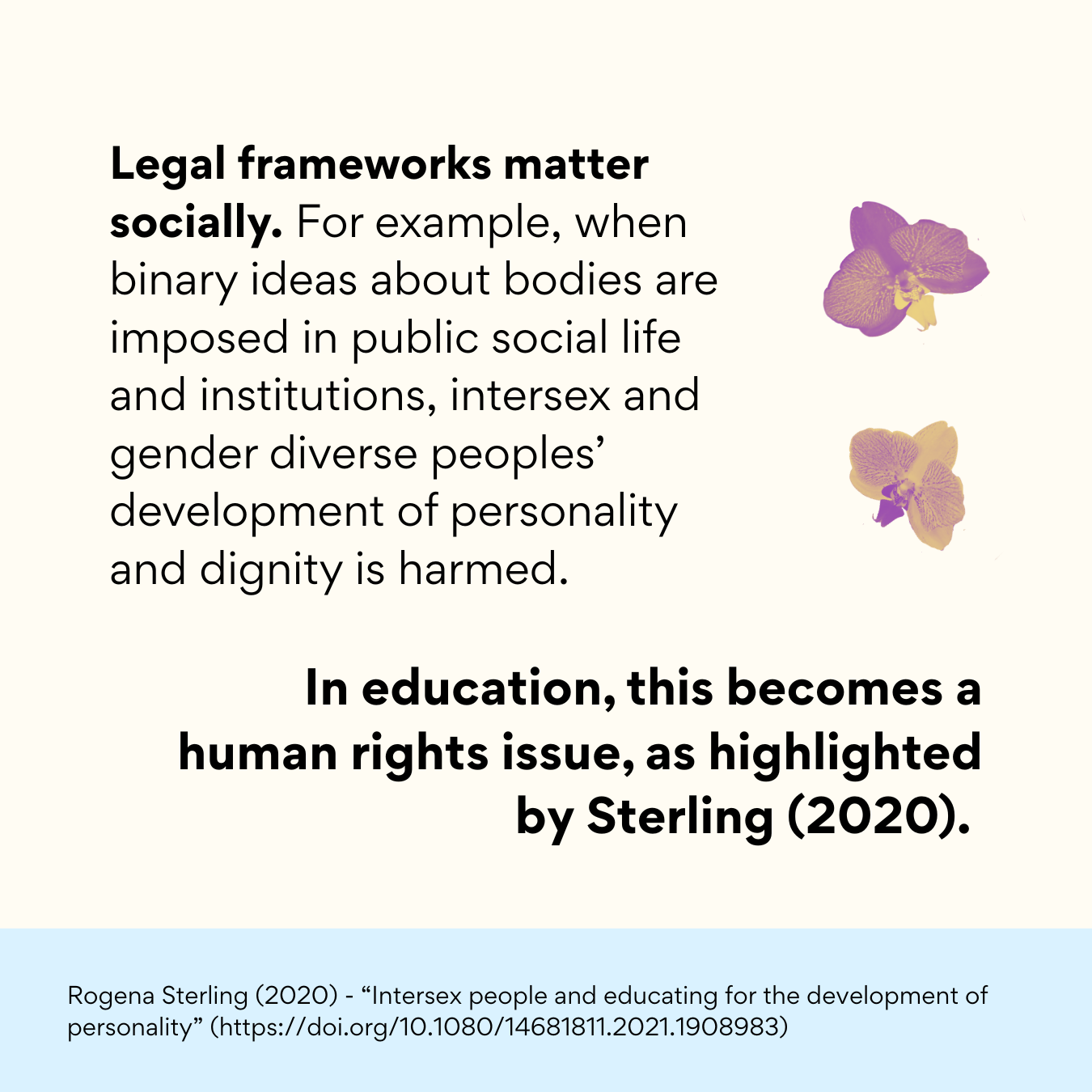
Legal frameworks matter socially. For example, when binary ideas about bodies are imposed in public social life and institutions, intersex and gender diverse peoples’ development of personality and dignity is harmed.
In education, this becomes a human rights issue, as highlighted by Sterling (2020).
15.
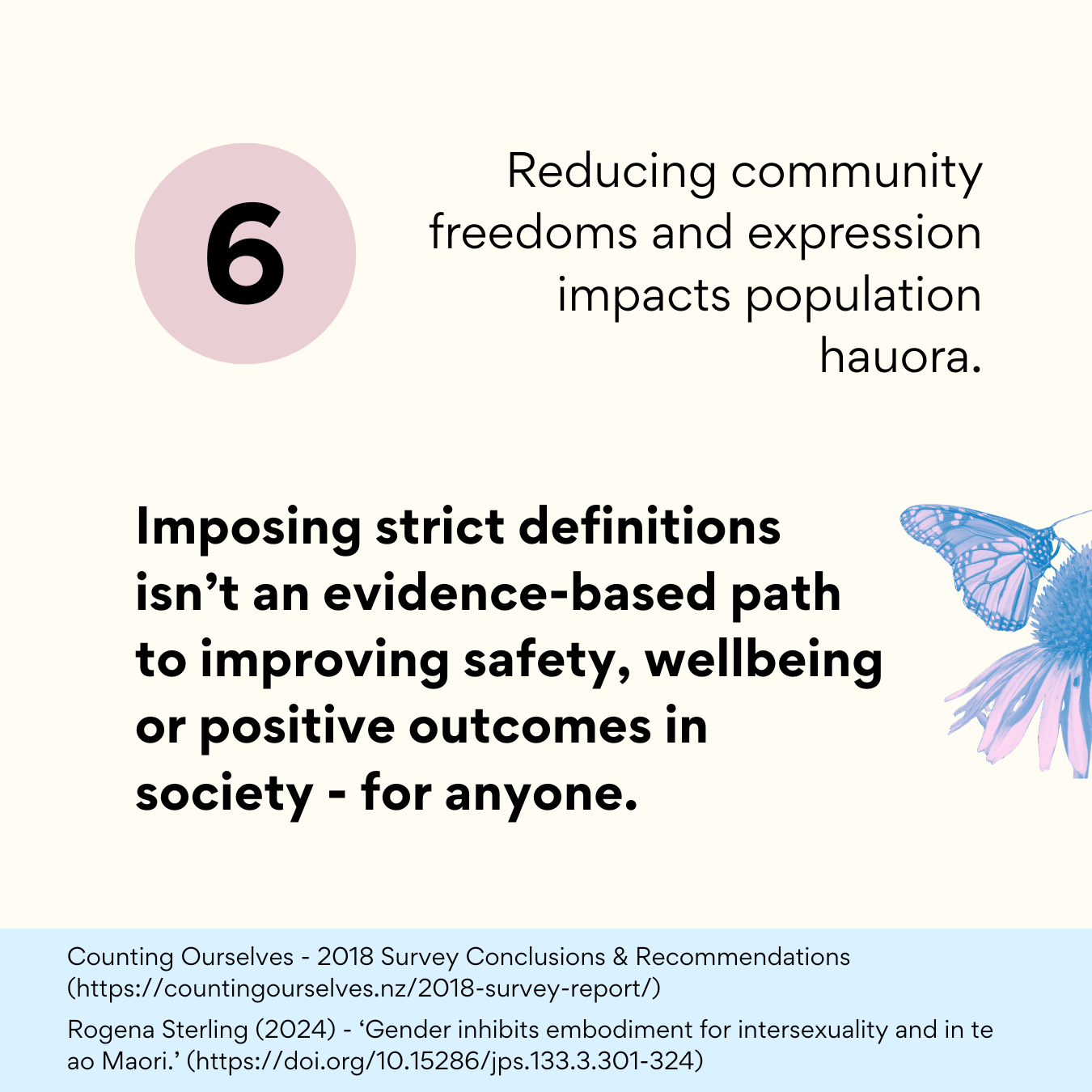
Reducing community freedoms and expression impacts population hauora.
Imposing strict definitions isn’t an evidence-based path to improving safety, wellbeing or positive outcomes in society – for anyone.
16.
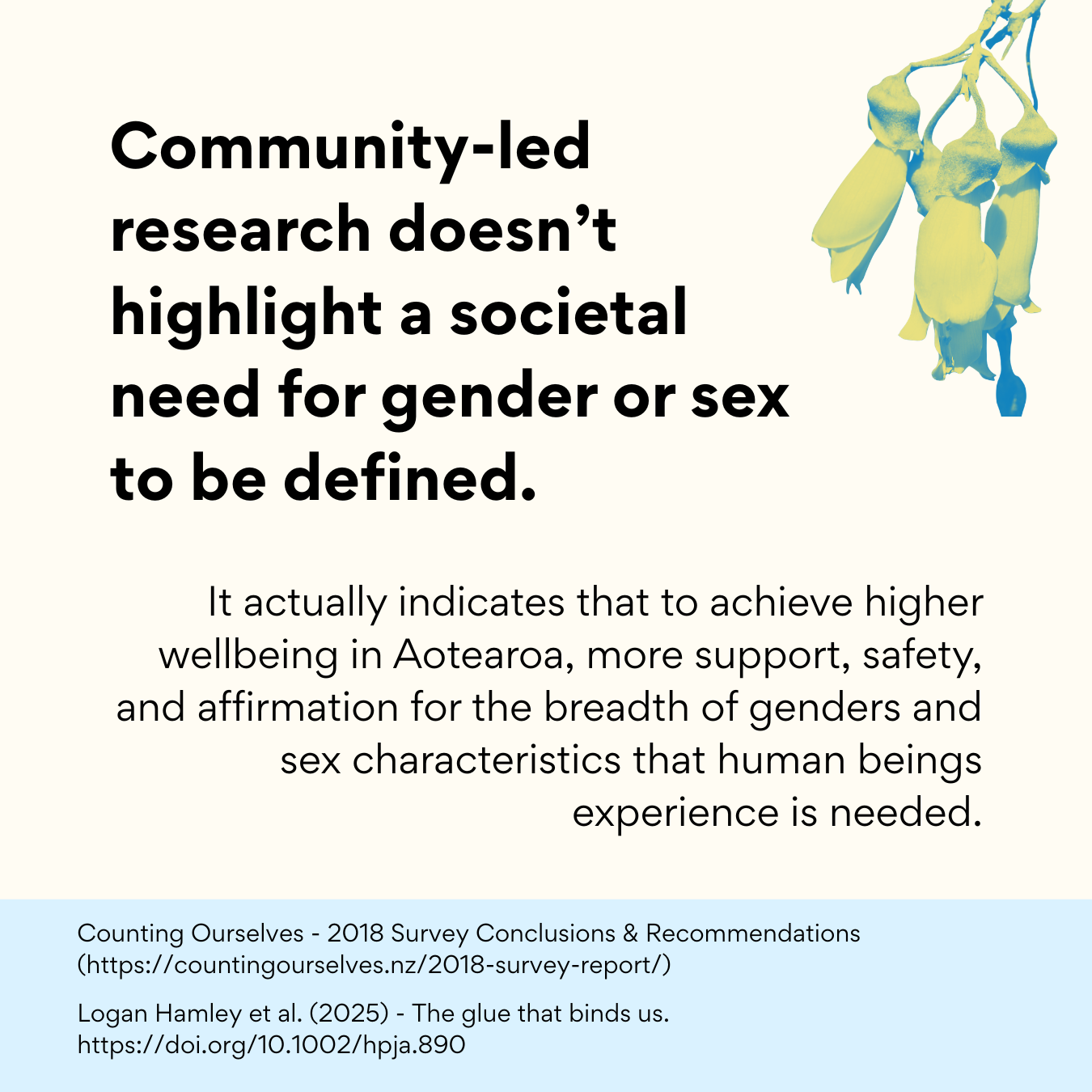
Community-led research doesn’t highlight a societal need for gender or sex to be defined.
It actually indicates that to achieve higher wellbeing in Aotearoa, more support, safety, and affirmation for the breadth of genders and sex characteristics that human beings experience is needed.
17.
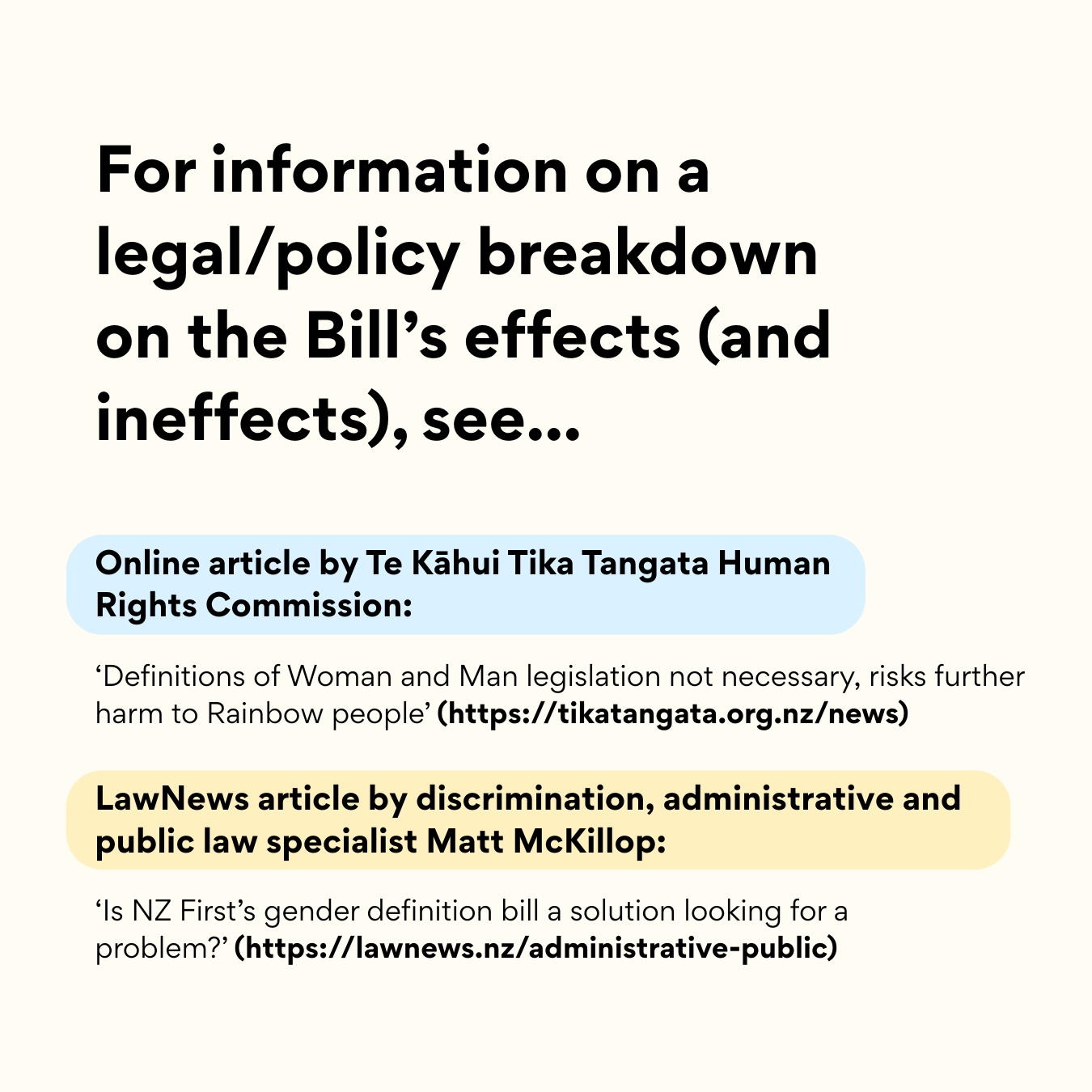
For information on a legal/policy breakdown on the Bill’s effects (and ineffects), see…
An online article/statement by Te Kāhui Tika Tangata Human Rights Commission: https://tikatangata.org.nz/news/definitions-of-woman-and-man-legislation-not-necessary-risks-further-harm-to-rainbow-people
A LawNews article by human rights, discrimination, administrative and public law specialist Matt McKillop: https://lawnews.nz/administrative-public/is-nz-firsts-gender-definition-bill-a-solution-looking-for-a-problem/
18.
Find this information insightful?
Submit on the Bill before July 2
You might also find Q-Topia’s online submission guide helpful: https://qtopia.org.nz/news/submission-guide-legislation-definition-of-woman-amp-man-amendment-bill
19.
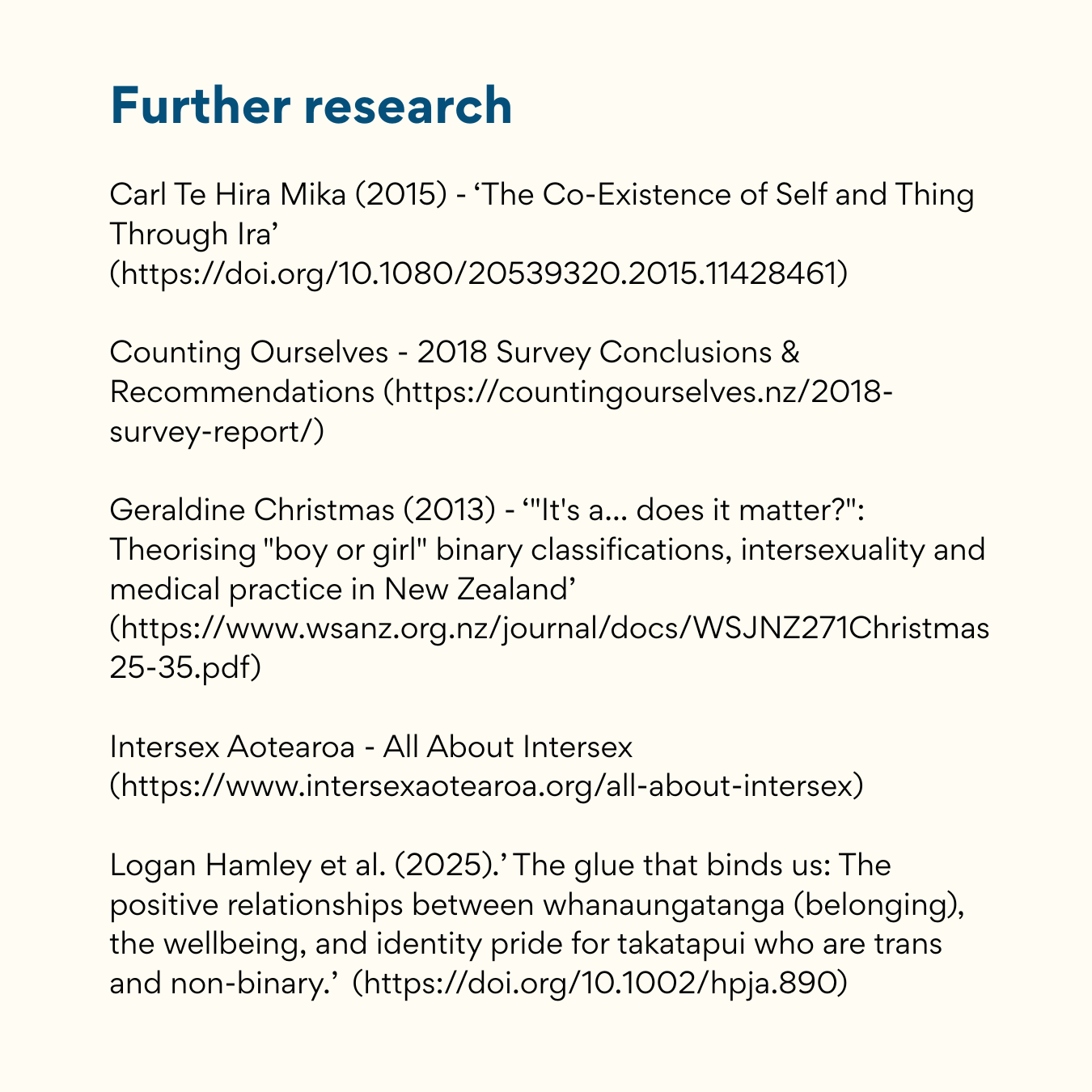
References: Research to explore
Carl Te Hira Mika (2015) – ‘The Co-Existence of Self and Thing Through Ira’ (https://doi.org/10.1080/20539320.2015.11428461)
Counting Ourselves – 2018 Survey Conclusions & Recommendations (https://countingourselves.nz/2018-survey-report/)
Geraldine Christmas (2021) – ‘”It’s a… does it matter?”: Theorising “boy or girl” binary classifications, intersexuality and medical practice in New Zealand’ (https://www.wsanz.org.nz/journal/docs/WSJNZ271Christmas25-35.pdf)
Intersex Aotearoa – All About Intersex (https://www.intersexaotearoa.org/all-about-intersex)
Logan Hamley et al. (2025).’ The glue that binds us: The positive relationships between whanaungatanga (belonging), the wellbeing, and identity pride for takatapui who are trans and non-binary.’ (https://doi.org/10.1002/hpja.890)
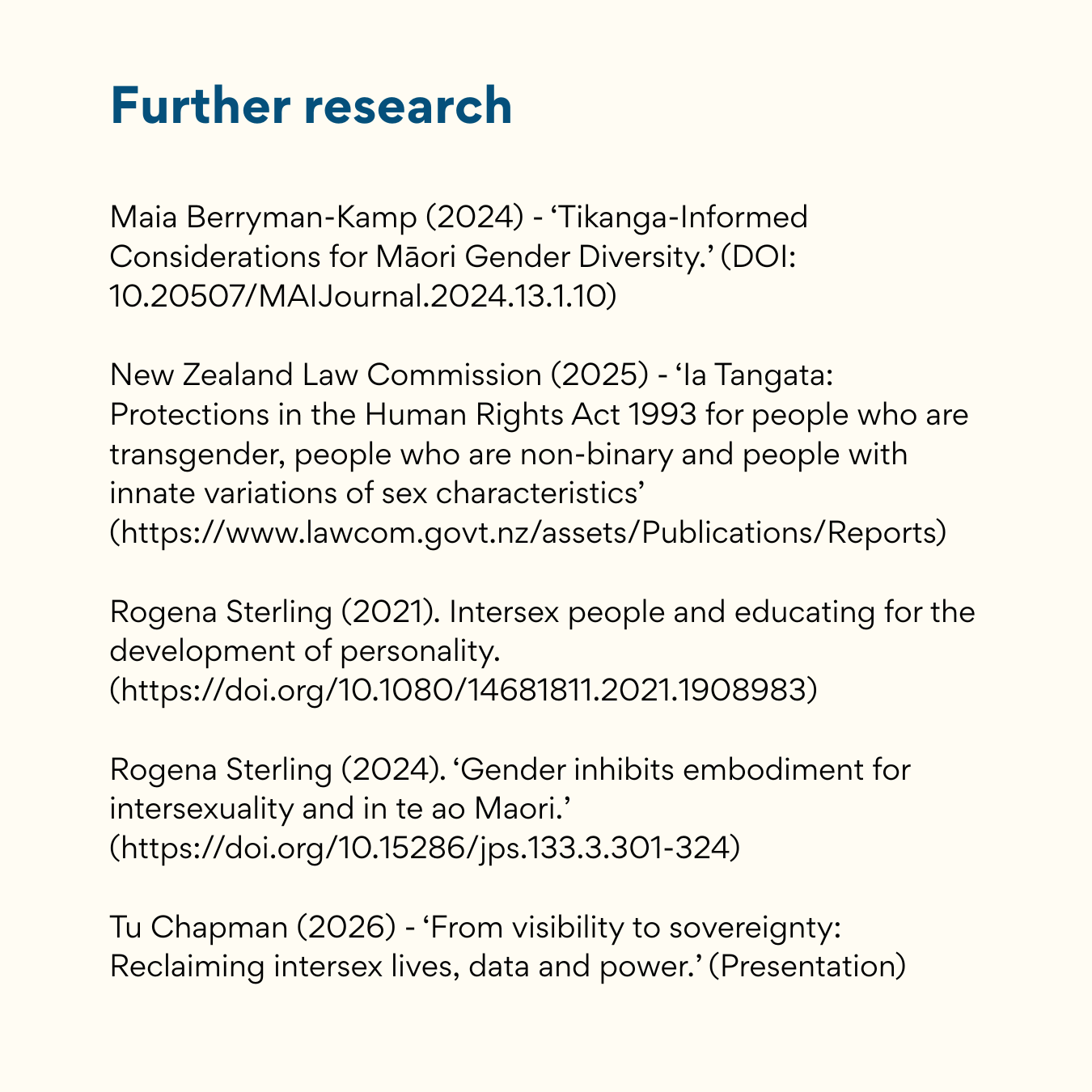
Maia Berryman-Kamp (2024) – ‘Tikanga-Informed Considerations for Māori Gender Diversity.’ (DOI: 10.20507/MAIJournal.2024.13.1.10)
New Zealand Law Commission (2025) – ‘Ia Tangata: Protections in the Human Rights Act 1993 for people who are transgender, people who are non-binary and people with innate variations of sex characteristics’ (https://www.lawcom.govt.nz/assets/Publications/Reports)
Rogena Sterling (2021). Intersex people and educating for the development of personality. (https://doi.org/10.1080/14681811.2021.1908983)
Rogena Sterling (2024). ‘Gender inhibits embodiment for intersexuality and in te ao Maori.’ (https://doi.org/10.15286/jps.133.3.301-324)
Tu Chapman (2026) – ‘From visibility to sovereignty: Reclaiming intersex lives, data and power.’ (Presentation)
POSTED ON: 24 June 2026